01
Brain Capital is society's greatest resource.
Brain Capital includes mental health, neurological health, creativity, innovation, learning capacity, emotional resilience, and workforce adaptability.
Slalom’s readout from the Texas Brain Economy Summit — on Brain Capital, mental health, neuroscience, AI, workforce transformation, and Houston’s opportunity to lead what comes next. Bringing more together.
The Texas Brain Economy Summit confirmed what we see every day with our customers: the future economy will be shaped by the cognitive, emotional, creative, and adaptive capacity of people. Brain Capital is becoming a defining measure of competitiveness, workforce resilience, and community prosperity — and it sits squarely inside Slalom’s fiercely human approach to business and technology.
Five strategic takeaways framing the rest of this readout.
Brain Capital includes mental health, neurological health, creativity, innovation, learning capacity, emotional resilience, and workforce adaptability.
Mental illness affects productivity, disability, workforce participation, healthcare costs, and GDP growth.
Houston's life sciences ecosystem, Texas Medical Center, population growth, diversity, and young workforce create a strong platform for Brain Capital leadership.
AI can integrate biomarkers, imaging, multi-omics, clinical symptoms, and digital phenotypes to define precision subtypes and improve treatment.
Healthcare, academia, employers, technology companies, economic development organizations, and public-sector leaders must collaborate to build a brain economy.
Panel 2 of the summit put the workplace at the center of the brain economy — and put Natalie Richardson from Slalom in the room as a voice for fiercely human teams.
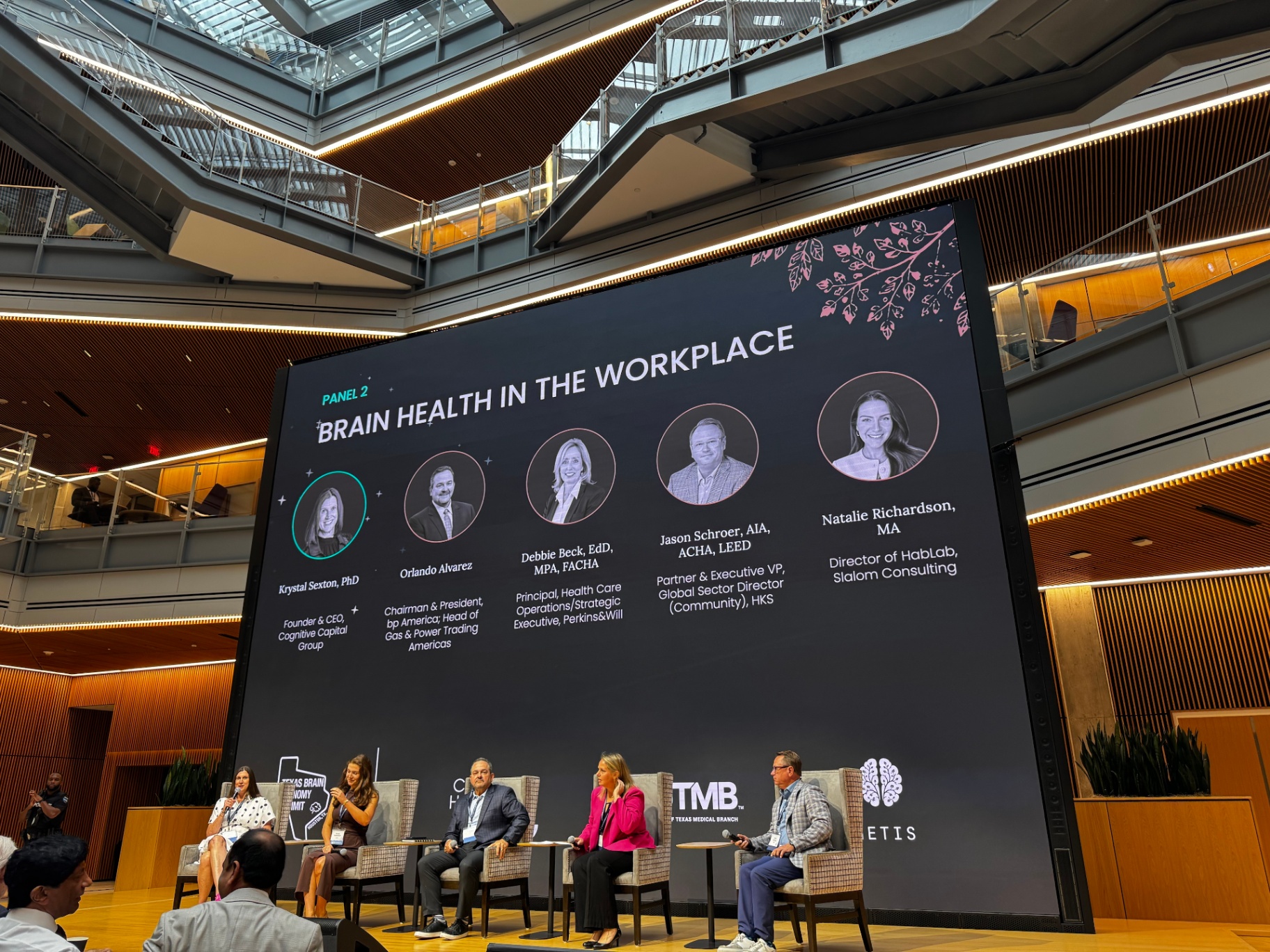
Burnout, attention fragmentation, and chronic stress are no longer HR issues — they show up as missed revenue, slower decisions, and weaker innovation.
Architecture, lighting, acoustics, and team rituals materially shape cognition. The physical and operational workplace is brain infrastructure.
Used well, AI extends human judgment. Used poorly, it atrophies it. The difference is intentional workflow and learning design.
Slalom's HabLab applies behavioral science to how teams form, focus, recover, and learn — turning brain capital into measurable team performance.
Google's keynote reframed the AI conversation around teams. The unit of performance isn't the individual or the model — it's the team, and the conditions that let it think together.
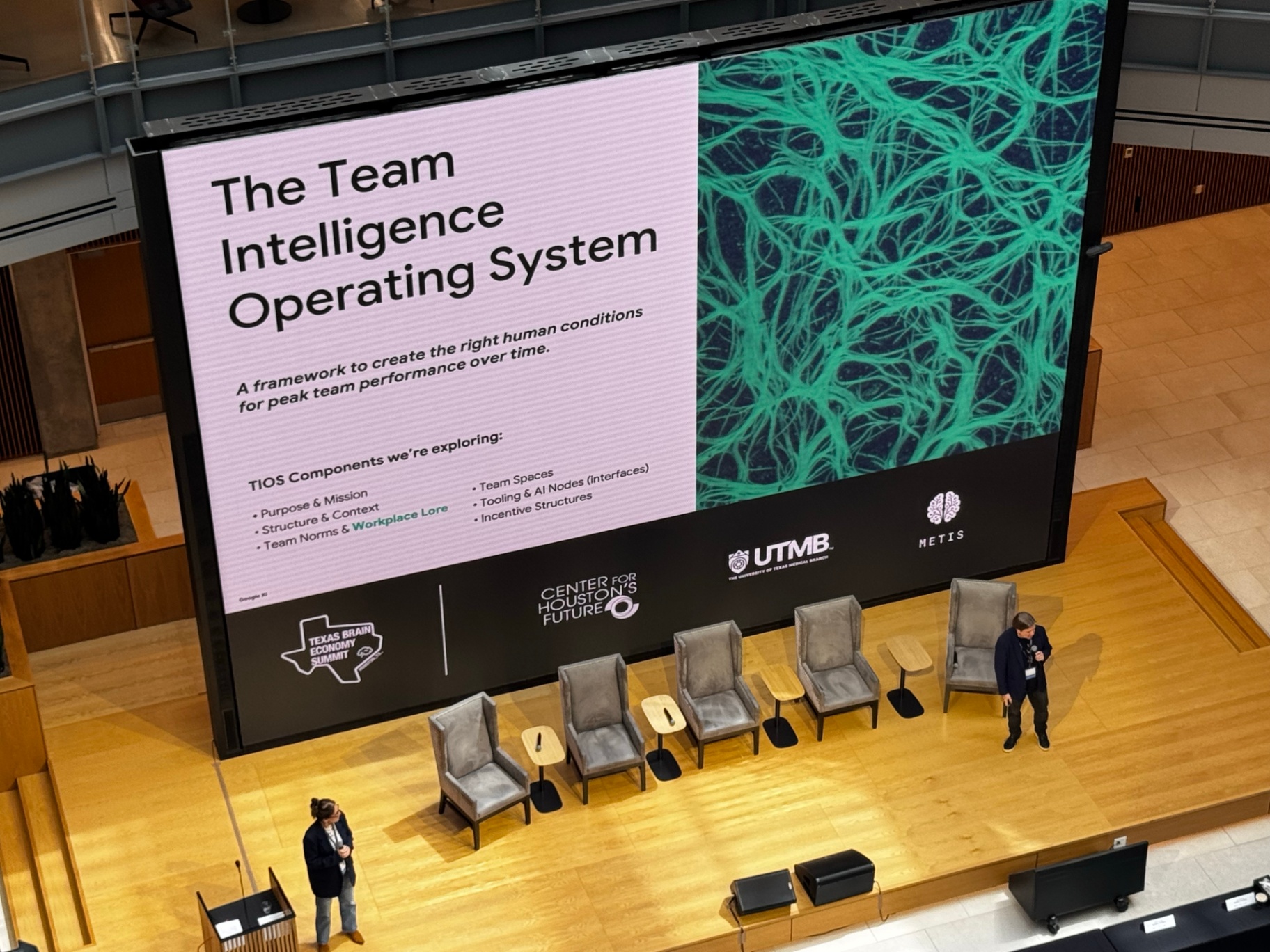
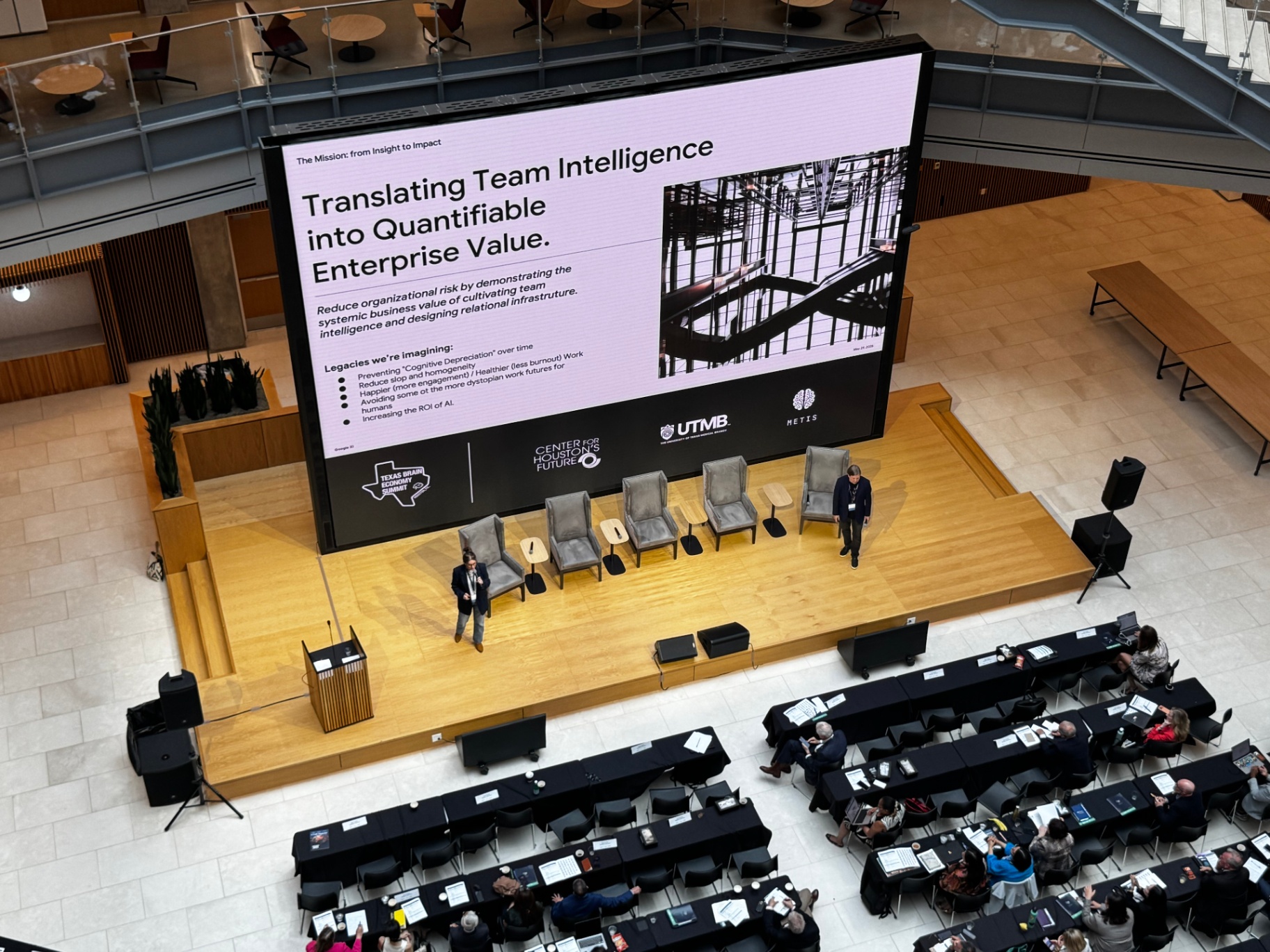
Reduce organizational risk by demonstrating the systemic business value of cultivating team intelligence and designing relational infrastructure.
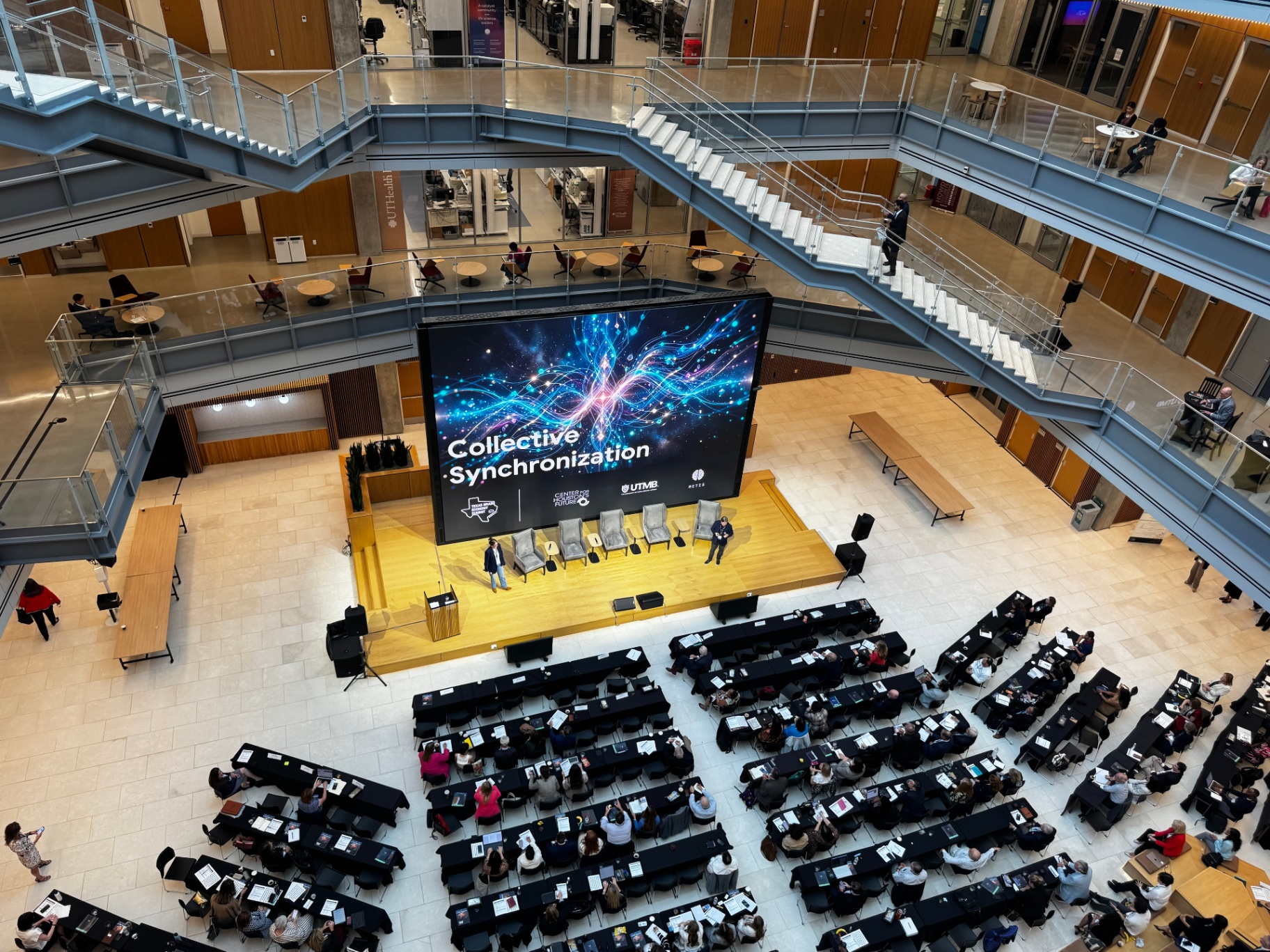
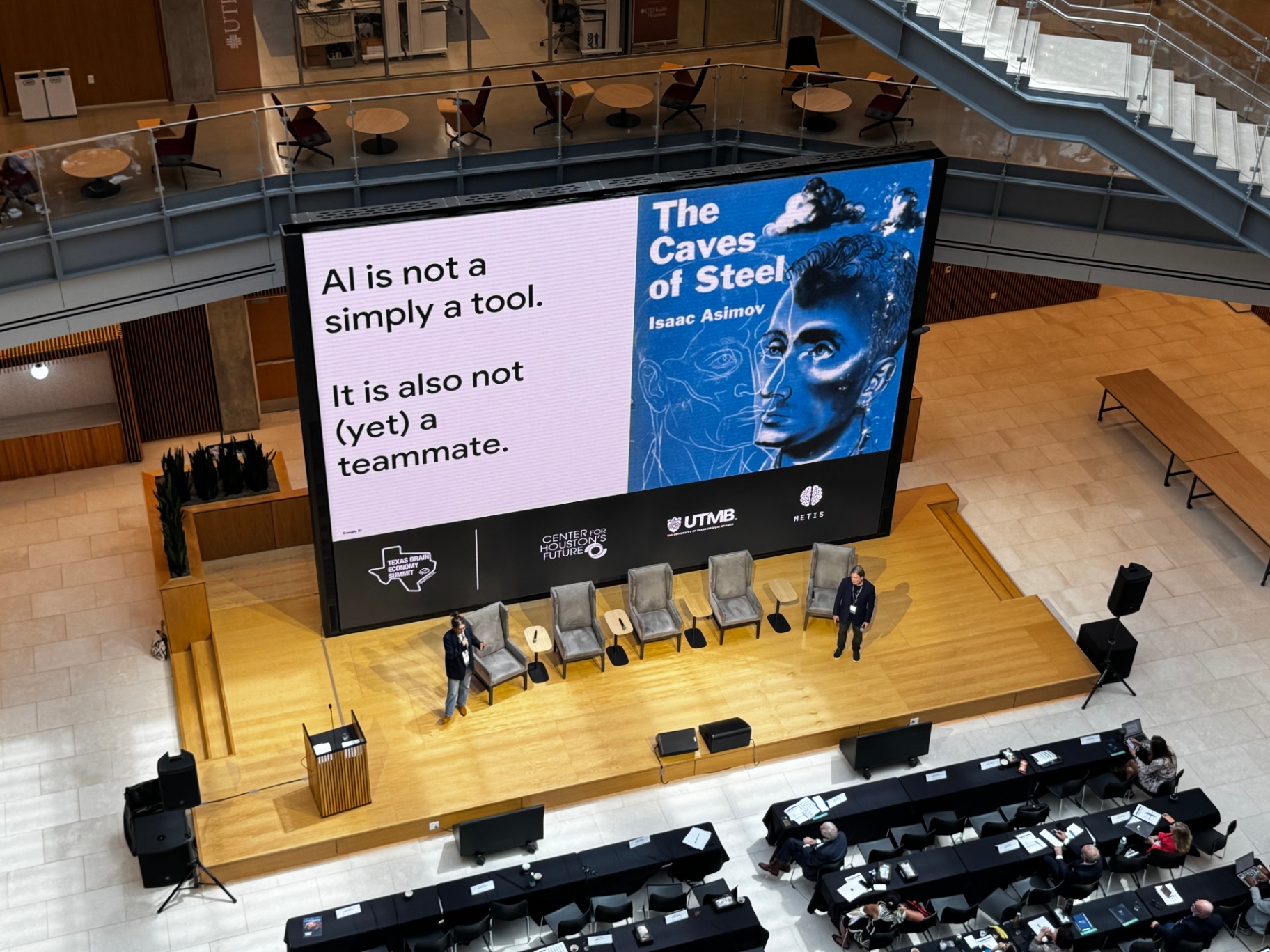
“AI is not simply a tool. It is also not (yet) a teammate.”
Google, riffing on Asimov’s The Caves of Steel — framing the design question of the next decade: what does it take to build teams where humans and AI think well, together?
Brain Capital expands the traditional human capital model by recognizing that mental health, cognitive resilience, creativity, and innovation are central to economic performance.
The summit challenged leaders to move beyond productivity alone and treat brain health, mental health, learning capacity, and resilience as core economic infrastructure.
Mental health services are not merely employee benefits — they are strategic investments in organizational performance.
Boosts focus, efficiency, and output.
Decreases unplanned leave, sick days, and inconsistent attendance.
Improves commitment, morale, and job satisfaction.
Lowers turnover and attracts talent seeking well-being-centered workplaces.
Reduces long-term medical claims related to unmanaged stress and illness.
Demonstrates care for staff and builds trust, belonging, and psychological safety.
A connected pathway from psychological well-being to cardiovascular and brain health — and ultimately, to economic health.
Vascular and lifestyle risks accumulate over decades. Early and midlife are the highest-leverage windows for prevention.
Serious mental illnesses and neurodegenerative disorders share biological mechanisms, symptom overlap, and impact on disease progression.
Treating neuropsychiatric and neurodegenerative disorders together may create new breakthroughs in brain health.
Chronic stress and serious mental illness may create a vulnerable brain. Later-life biological or neurological events may act as a 'second hit,' increasing risk for neurodegeneration.
Chronic stress and serious mental illness create underlying vulnerability.
AI integrates multi-modal data to define precision subtypes and inform novel endpoints — moving brain health from broad treatment to personalized intervention.
Machine learning integrates multi-modal data to surface biosignatures and patient-level patterns.
Patient groups most likely to respond to specific treatment mechanisms.
Targeted therapies matched to each subtype, improving outcomes and reducing trial-and-error care.
AI is having a tremendous impact on interrogating human data to define precision subtypes and inform novel endpoints.
Mental health is an economic, workforce, productivity, and innovation issue.
Houston is the proof point — the demographic, medical, and economic stack that lets Texas lead what comes next for Brain Capital. Not just a centerpiece, but the ultimate launchpad.
A continuous influx of talent feeding the region's brain-trust and economic power.
Over 145+ languages spoken, representing a vast, multicultural cognitive asset.
of surveyed residents agree: “If you work hard in this city, eventually you will succeed.”
A Texas DPRIT-style model — inspired by the state’s successful oncology initiatives — could become a statewide effort to accelerate brain health research, innovation, and venture creation.
Texas could create a unified statewide push for Brain Capital that connects research, clinical care, technology, venture capital, and public-private partnerships.
Innovation alone is not enough. Regions must pair innovation ecosystems with mental health, brain health, social infrastructure, and workforce resilience.
Rapid Brain Capital expansion
Growth driven by aggressive investment in skills development and innovation systems.
Brain Capital resilience
Stable performance supported by strong institutions and social systems.
The Brain Capital paradox
Strong innovation ecosystems, but declining brain capital outcomes — particularly in brain health.
A bridge for future collaboration across healthcare, academia, employers, public sector, and venture.
A digital dashboard that tracks Houston-region Brain Capital indicators in real time.
Tools that help employers assess the value of mental health investments.
How AI, analytics, and digital tools can support brain health research and precision neuroscience.
Learning agility, psychological safety, resilience, neurodiversity, and future workforce readiness.
Ongoing public-facing insights, reports, webinars, and roundtables.
A people-centered framework to help institutions move from insight to action.
A comprehensive archive of who participated, what was discussed, and why these leaders matter to the future of the Brain Economy.
Advancing the Brain Economy through innovation, AI, and investment.
Bring together leaders from healthcare, neuroscience, venture capital, government, philanthropy, technology, AI, academia, and industry to accelerate Brain Capital development and position Texas as a leader in the global Brain Economy.
The summit declared Brain Capital — cognitive, emotional, and creative capacity — as economic infrastructure for the 21st century.
State, civic, academic, and industry leaders publicly aligned around Houston as the U.S. anchor for the Brain Economy.
Pairing AI with brain biology to enable precision diagnostics, therapeutics, and workforce tools.
Aligning Texas, U.S., and international policy frameworks around Brain Capital as economic infrastructure.
Life of the Brain: taking a lifespan perspective on the brain, from early development through workplace years and healthy aging — extending to investment, AI, and global collaboration.
Commercialization, venture formation, AI-native biotech, and the infrastructure required to scale the Brain Economy.
A curated lens on the speakers shaping the summit — their role, their stage, and the specific relevance they bring to advancing Brain Capital.
Brain health must become preventive, precision-based, and measurable.
Mental health is workforce infrastructure.
Brain Capital may represent one of the largest emerging investment opportunities.
Brain health should be treated as economic infrastructure.
A synthesis of the patterns that surfaced across keynotes, panels, and dialogues — the themes leaders returned to most often, and what they imply for Houston, employers, and healthcare systems.
Surfaced from Day 1's 'Brain Health in the Age of AI' panel through Day 2's AI-native biotech fireside and the AI + Tech infrastructure panel.
AI is no longer adjacent to brain health — it is the layer that makes diagnostics, therapeutics, and workforce tools scalable.
Anchored by the 'Measuring the Brain Economy' panel and reinforced across investing, policy, and Project Metis sessions.
What is not measured cannot be financed or governed — Brain Capital needs a shared metric layer to move capital and policy.
Centered in the Healthy Aging panel and Brain–Heart Connection keynote, with throughlines into systems transformation and venture sessions.
Cognitive aging is the largest cost curve in healthcare — bending it is both a humanitarian and economic imperative.
From the Workplace Brain Health panel and Team Intelligence keynote through the U.S. Chamber fireside and AI-augmented-work discussions.
Mental and cognitive health is now the binding constraint on enterprise performance — and the most leveraged employer investment.
From AI-Native Biotech through Industrializing Brain Therapeutics and AI + Tech as Brain-Economy Infrastructure.
Brain therapeutics and neurotech are crossing from research into industrial-grade pipelines — the next platform category in life sciences.
Across Impact Investing (Day 1), Translating Science to Brain Ventures, Brain Lens Investing, and Technology Investing at Scale (Day 2).
Brain health is being recognized as a distinct investable category spanning therapeutics, digital tools, workforce, and infrastructure.
From the State Keynote and Nature Medicine Commission Announcement through Project Metis, Global Brain Economy, and the closing Declaration.
No single actor — government, academia, industry, or capital — can build the Brain Economy alone. Cross-sector coalitions are the operating model.
Frames Day 1's opening 'Enabling Human Flourishing' track and threads through workforce, healthy aging, and the closing Declaration.
Brain Capital reframes human well-being as the foundation of economic growth — not a trade-off against it.
Credentials, organizations, sessions, and a short profile for each speaker — cross-linked from the agenda above.

Leads team-science strategy at UTMB, advancing collaborative research on aging, immunology, and brain health.
Models how academic medical centers can integrate aging, inflammation, and cognition research at scale.
Translates academic neuroscience into the clinical, workforce, and community pipelines that make Brain Capital measurable.
Links research panels, healthy aging, and workplace brain health to the venture and AI tracks.

Provost of Rice University, overseeing academic strategy, research, and faculty across one of the nation's top private research institutions.
Aligns Rice's research engine with Houston's Brain Economy ambitions.
Translates academic neuroscience into the clinical, workforce, and community pipelines that make Brain Capital measurable.
Links research panels, healthy aging, and workplace brain health to the venture and AI tracks.

Economist, entrepreneur, and global strategist serving as Research Professor at the University of Texas at Dallas and Inaugural Director of the Brainomics Venture at Center for BrainHealth. With more than 35 years of international leadership experience, his work focuses on the economics of brain health, human flourishing, and shaping public policy beyond traditional GDP measures.
Brings the macroeconomic argument for Brain Capital into the heart of Texas's brain-health research network.
Translates academic neuroscience into the clinical, workforce, and community pipelines that make Brain Capital measurable.
Links research panels, healthy aging, and workplace brain health to the venture and AI tracks.

Leads Meadows Institute, Texas's premier mental-health policy and systems-change organization.
Owns the state-level mental health policy agenda that any Brain Economy strategy must traverse.
Translates academic neuroscience into the clinical, workforce, and community pipelines that make Brain Capital measurable.
Links research panels, healthy aging, and workplace brain health to the venture and AI tracks.

CEO of the American Psychological Association, the leading scientific and professional organization representing psychology in the United States, with over 190,000 members. A visionary leader, clinical and community psychologist, and health care innovator, Evans previously spent more than two decades in policy positions, where he harnessed science, clinical care, community wisdom, and cross-system collaboration to transform behavioral health systems in Philadelphia and Connecticut.
Commands the U.S. psychology profession's stance on AI, mental health, and workforce.
Translates academic neuroscience into the clinical, workforce, and community pipelines that make Brain Capital measurable.
Links research panels, healthy aging, and workplace brain health to the venture and AI tracks.

Senior Fellow at McKinsey & Company and Co-Director of Brain Health at the McKinsey Health Institute, focused on mental, neurological, and addiction-related health. She brings experience across policy, research, and education, including advising the U.S. Administration for Children and Families on behavioral health systems for children and families.
Builds the financing rails for mental-health systems change in Texas and beyond.
Translates academic neuroscience into the clinical, workforce, and community pipelines that make Brain Capital measurable.
Links research panels, healthy aging, and workplace brain health to the venture and AI tracks.
Director of the Center for Applied Cognitive Science and Professor in the Department of Psychology at The University of Texas at Austin. A developmental cognitive scientist building applied research on learning, culture, and cognition.
Anchors the cognitive-science evidence base for early Brain Capital interventions.
Translates academic neuroscience into the clinical, workforce, and community pipelines that make Brain Capital measurable.
Links research panels, healthy aging, and workplace brain health to the venture and AI tracks.

Leads the Center for Houston's Future, a regional strategy and convening organization shaping long-horizon plans for Houston's economy, workforce, and human capital.
Architect of Houston's Brain Economy convening strategy and chief storyteller for the region's Brain Capital agenda.
Carries the employer and ecosystem perspective — converting Brain Capital from concept to competitive advantage for Houston and beyond.
Appears across 5 sessions, connecting Welcome Remarks (Day 1) and The Houston Region: Project Metis (Moderator) to the broader Brain Economy program.

Executive Advisor for Brain Economy at the Canadian Centre on Substance Use and Addiction, where she leads cross-sector efforts to advance Canada's emerging brain economy. A longtime Canadian government executive, she brings more than 20 years of experience in public policy, communications, and national strategy across health, social development, and environmental initiatives.
Brings the addiction-economy and Canadian national-strategy dimension into the Brain Capital conversation.
Aligns government priorities with Brain Capital as economic infrastructure — shaping the policy, funding, and regulatory conditions Houston and Texas need to lead.
Threads through every policy, measurement, and global-alignment panel — from state-level keynotes to international frameworks.

Chairman of the Davos Alzheimer's Collaborative, a global foundation advancing research and care systems for Alzheimer's and brain health worldwide. He is also Chairman and Co-Founder of UsAgainstAlzheimer's, a leading advocacy organization accelerating the development of treatments and prevention strategies.
Convenes the global Alzheimer's ecosystem at the highest levels of government and industry.
Aligns government priorities with Brain Capital as economic infrastructure — shaping the policy, funding, and regulatory conditions Houston and Texas need to lead.
Threads through every policy, measurement, and global-alignment panel — from state-level keynotes to international frameworks.

Chair of the Department of Cardiovascular Medicine at UTMB, Medical Director of the Cardiovascular Care Line, and founding Director of the Sealy Heart and Vascular Institute. An internationally recognized interventional cardiologist and researcher, he has led pioneering cardiovascular programs, authored more than 492 scientific publications, and helped shape national clinical guidelines in cardiovascular medicine.
The clinical authority connecting heart disease prevention to brain longevity.
Translates academic neuroscience into the clinical, workforce, and community pipelines that make Brain Capital measurable.
Links research panels, healthy aging, and workplace brain health to the venture and AI tracks.

Physician, neuroscientist, and global leader in the emerging brain economy, serving as a senior fellow and advisor at Rice University's Office of Innovation. He is widely recognized for pioneering the "brain capital" framework and leads international initiatives that integrate brain health and skills into economic policy, innovation, and societal development.
Principal intellectual architect of the Brain Capital / Brain Economy framework globally.
Translates academic neuroscience into the clinical, workforce, and community pipelines that make Brain Capital measurable.
Appears across 3 sessions, connecting Across the World (Day 1 Panel) and Nature Medicine Commission Announcement (Day 2) to the broader Brain Economy program.
Neuroscientist and Program Director at Wellcome Leap, leading the 1Kd (First 1000 Days) and FORM programs that advance innovations supporting early cognitive development and infant brain health. Her work spans neuroscience, mental health, and maternal and child health, translating breakthrough science into scalable solutions with real-world impact.
Channels Wellcome Leap's capital into the earliest, highest-ROI window for Brain Capital formation.
Translates academic neuroscience into the clinical, workforce, and community pipelines that make Brain Capital measurable.
Links research panels, healthy aging, and workplace brain health to the venture and AI tracks.

Neuroscientist and Co-Chair of the UK Government's Mental Health Goals Programme, with professorships at Oxford and Yale. A former global head of neuroscience at Johnson & Johnson, he has led groundbreaking research and development in neuropsychiatric and neurodegenerative disorders.
Bridges drug development, government strategy, and academic science for mental health.
Translates academic neuroscience into the clinical, workforce, and community pipelines that make Brain Capital measurable.
Links research panels, healthy aging, and workplace brain health to the venture and AI tracks.

AI researcher, professor, and co-founder of CogniGuard, a platform focused on measuring and protecting cognitive fitness in the age of AI. He also serves as CTO for Startups & Digital Natives at Microsoft EMEA, where he partners with high-growth companies to design and deploy advanced AI systems.
Brings hyperscaler AI infrastructure perspective to brain-health innovation.
Carries the employer and ecosystem perspective — converting Brain Capital from concept to competitive advantage for Houston and beyond.
Bridges workplace brain-health, Project Metis, and the AI-augmented workforce conversations.

Executive Vice President and Chief Physician Executive at Memorial Hermann Health System, where he leads physician integration and clinical care redesign. A nationally recognized emergency medicine leader, he previously chaired the Department of Emergency Medicine at UTHealth and oversaw major trauma and EMS programs.
Brings Memorial Hermann's clinical scale to Houston's Brain Economy initiatives.
Translates academic neuroscience into the clinical, workforce, and community pipelines that make Brain Capital measurable.
Links research panels, healthy aging, and workplace brain health to the venture and AI tracks.

Partner and Executive Vice President at HKS, serving as the firm's Global Sector Director, Community, overseeing HKS's Health, Government, Education, and Life Science practices and its Structural Engineering service. An architect with more than 25 years of experience designing spaces and places that support the human condition, sharing research, best practices, and creativity to have a positive impact on clients and the communities they serve.
Designs the physical environments where Brain Capital is built or eroded.
Carries the employer and ecosystem perspective — converting Brain Capital from concept to competitive advantage for Houston and beyond.
Bridges workplace brain-health, Project Metis, and the AI-augmented workforce conversations.

President and CEO of the Brain & Behavior Research Foundation, the largest private funder of mental health research grants. A psychiatrist and public educator, he is also host and executive producer of the Emmy-nominated television series Healthy Minds, focused on reducing stigma and advancing understanding of mental health.
Catalytic philanthropy that de-risks frontier psychiatric and neuroscience research.
Translates academic neuroscience into the clinical, workforce, and community pipelines that make Brain Capital measurable.
Links research panels, healthy aging, and workplace brain health to the venture and AI tracks.

Head of Urban Transformation at the World Economic Forum and a global leader in urban innovation and economic development. He brings together governments, investors, and industry to scale solutions that strengthen cities and improve quality of life.
Globalizes Houston's Brain Economy story through the WEF's city and country networks.
Aligns government priorities with Brain Capital as economic infrastructure — shaping the policy, funding, and regulatory conditions Houston and Texas need to lead.
Threads through every policy, measurement, and global-alignment panel — from state-level keynotes to international frameworks.

Vice President and Chief Wellness Officer at MD Anderson Cancer Center, leading initiatives to improve clinician wellbeing and reduce burnout across healthcare systems. A neurologist and nationally recognized leader in physician wellness, she develops evidence-based strategies and serves in key leadership roles with the American Academy of Neurology and the National Academy of Medicine.
Bridges pediatric neurology and workforce wellness — exactly the lifespan view the Brain Economy requires.
Translates academic neuroscience into the clinical, workforce, and community pipelines that make Brain Capital measurable.
Links research panels, healthy aging, and workplace brain health to the venture and AI tracks.

Executive Director of the Belfer Neurodegeneration Consortium and Co-Director of the Cancer Neuroscience Program at MD Anderson Cancer Center, focused on developing Alzheimer's therapies. With prior leadership roles at Merck, Takeda, and Envoy Therapeutics, he has advanced multiple clinical-stage treatments for neurological disorders.
Coordinates the multi-institutional R&D needed to bend the curve on dementia.
Translates academic neuroscience into the clinical, workforce, and community pipelines that make Brain Capital measurable.
Links research panels, healthy aging, and workplace brain health to the venture and AI tracks.

Leads the world's largest nonprofit funder of Alzheimer's research, advocacy, and care services.
Wields unmatched convening power across research, care delivery, and policy for cognitive aging.
Translates academic neuroscience into the clinical, workforce, and community pipelines that make Brain Capital measurable.
Links research panels, healthy aging, and workplace brain health to the venture and AI tracks.

Physician-scientist leading UTMB, one of the largest academic health systems in Texas, with a focus on aligning research, clinical care, and population health.
Single most visible academic-medicine voice for the Texas Brain Economy.
Translates academic neuroscience into the clinical, workforce, and community pipelines that make Brain Capital measurable.
Appears across 4 sessions, connecting The Houston Region: Project Metis (Day 1 Panel) and Systems Transformation for the Brain Economy (Day 2) to the broader Brain Economy program.

Founded Cognitive Capital Group to help enterprises measure and grow cognitive performance as a strategic asset.
Operationalizes Brain Capital as a measurable enterprise asset — directly relevant to employer adoption.
Carries the employer and ecosystem perspective — converting Brain Capital from concept to competitive advantage for Houston and beyond.
Bridges workplace brain-health, Project Metis, and the AI-augmented workforce conversations.

Head of Global Mental Health at Google and an affiliate at the Johns Hopkins Bloomberg School of Public Health, where she previously led one of the world's leading global mental health research programs. A clinical researcher, innovator and Founder of CETA Global, she developed the Common Elements Treatment Approach (CETA) and is advancing the responsible use of AI to scale evidence-based mental health care worldwide.
Brings the global-health evidence base for scaling psychosocial interventions.
Translates academic neuroscience into the clinical, workforce, and community pipelines that make Brain Capital measurable.
Links research panels, healthy aging, and workplace brain health to the venture and AI tracks.

Vice President of Health Policy at the U.S. Chamber of Commerce, where she leads national healthcare policy and advocacy efforts. She brings extensive experience in government, industry, and public affairs, including leadership roles at PhRMA and the White House.
The most influential employer-voice policy operator on workforce mental health in Washington.
Aligns government priorities with Brain Capital as economic infrastructure — shaping the policy, funding, and regulatory conditions Houston and Texas need to lead.
Threads through every policy, measurement, and global-alignment panel — from state-level keynotes to international frameworks.

Founder of the Google Experience Institute (Google XI), Google's research practice on the future of teams, events, and human collaboration.
Originator of the Team Intelligence framework that links AI, teaming, and Brain Capital.
Carries the employer and ecosystem perspective — converting Brain Capital from concept to competitive advantage for Houston and beyond.
Bridges workplace brain-health, Project Metis, and the AI-augmented workforce conversations.

Drives Center for Houston's Future's strategic initiatives, including Project Metis and Houston's Brain Capital measurement work.
Operational owner of Houston's regional Brain Capital measurement effort.
Carries the employer and ecosystem perspective — converting Brain Capital from concept to competitive advantage for Houston and beyond.
Bridges workplace brain-health, Project Metis, and the AI-augmented workforce conversations.

John S. Dunn Distinguished Professor in the Department of Psychiatry and Behavioral Sciences at UTHealth Houston and Assistant Dean of Digital Health & Innovation in the School of Behavioral Health Sciences. A board-certified clinical psychologist, her research focuses on integrating AI, digital health, and measurement-based care to improve outcomes in intensive mental health settings.
Connects clinical psychology and digital health innovation inside one of Houston's flagship academic medical centers.
Translates academic neuroscience into the clinical, workforce, and community pipelines that make Brain Capital measurable.
Links research panels, healthy aging, and workplace brain health to the venture and AI tracks.

Past president of the American Heart Association and a leading neurologist linking cardiovascular health to cognitive aging.
The most visible national voice on the brain–heart connection — central to preventive Brain Capital.
Translates academic neuroscience into the clinical, workforce, and community pipelines that make Brain Capital measurable.
Links research panels, healthy aging, and workplace brain health to the venture and AI tracks.

Director of Slalom's HabLab, applying behavioral science to how teams form, focus, recover, and learn inside enterprise transformation.
Brings behavior-change science to enterprise change programs — the practical layer of Brain Capital at work.
Carries the employer and ecosystem perspective — converting Brain Capital from concept to competitive advantage for Houston and beyond.
Bridges workplace brain-health, Project Metis, and the AI-augmented workforce conversations.

Senior Interior Project Manager and Associate Principal in the Dallas studio of Perkins&Will, integrating interior design with architecture for high-performing healthcare and corporate environments. Her evidence-based approach centers the relationship between psychology and design to prioritize well-being.
Brings the built-environment lens to workplace brain health — design as Brain Capital infrastructure.
Carries the employer and ecosystem perspective — converting Brain Capital from concept to competitive advantage for Houston and beyond.
Bridges workplace brain-health, Project Metis, and the AI-augmented workforce conversations.

Chairman and President of bp America and Head of Gas & Power Trading Americas, leading bp's U.S. operations and natural gas and power business. More than three decades in the energy sector spanning accounting, strategy, and trading; serves on multiple national industry and conservation boards.
Brings a Fortune-scale employer voice to the workplace brain-health conversation — energy sector leadership shapes how large U.S. workforces invest in cognitive and mental health.
Carries the employer and ecosystem perspective — converting Brain Capital from concept to competitive advantage for Houston and beyond.
Bridges workplace brain-health, Project Metis, and the AI-augmented workforce conversations.

Founder and Director of NeuroCentury and a leading voice at the intersection of brain science, policy, and the global economy. He previously led the Human Brain Project and continues to advise international institutions on neurotechnology and innovation policy.
Europe's leading Brain Economy policy entrepreneur and a key transatlantic bridge.
Aligns government priorities with Brain Capital as economic infrastructure — shaping the policy, funding, and regulatory conditions Houston and Texas need to lead.
Threads through every policy, measurement, and global-alignment panel — from state-level keynotes to international frameworks.

Executive Director of The Hackett Center for Mental Health and Executive Vice President of Economic Mobility at the Meadows Mental Health Policy Institute, leading work at the intersection of early childhood development, maternal health, and public policy. A nationally recognized expert in evaluation and systems design, she partners with governments and funders to translate evidence into scalable strategies that improve brain health outcomes for children and families.
Translates pediatric mental health science into state-level policy — a Brain Economy prerequisite.
Translates academic neuroscience into the clinical, workforce, and community pipelines that make Brain Capital measurable.
Links research panels, healthy aging, and workplace brain health to the venture and AI tracks.

Co-leads Google XI's applied research on teaming, AI augmentation, and the operating systems of high-performing groups.
Carries Google's institutional research on how AI changes teamwork — central to workforce Brain Capital.
Carries the employer and ecosystem perspective — converting Brain Capital from concept to competitive advantage for Houston and beyond.
Bridges workplace brain-health, Project Metis, and the AI-augmented workforce conversations.

Vice President and Head of U.S. Public Policy at Eli Lilly, where he leads strategy and engagement on key healthcare policy issues affecting the biopharmaceutical industry. With leadership experience across Lilly, Novo Nordisk, and Avalere Health, he specializes in translating complex policy challenges into actionable strategies that shape public policy and market access outcomes.
Anchors the biopharma federal-policy dimension of the Brain Economy conversation.
Aligns government priorities with Brain Capital as economic infrastructure — shaping the policy, funding, and regulatory conditions Houston and Texas need to lead.
Threads through every policy, measurement, and global-alignment panel — from state-level keynotes to international frameworks.

Economist and international expert on financial systems, regulation, and socio-economic development, and Founder and President of the Euro-Mediterranean Economists Association. A leading voice in the global brain economy movement, serving as Co-Founder of the Brain Capital Alliance and holding senior academic and advisory roles across major international institutions.
Pioneer of the Brain Capital construct itself — the intellectual scaffolding of the summit.
Translates academic neuroscience into the clinical, workforce, and community pipelines that make Brain Capital measurable.
Links research panels, healthy aging, and workplace brain health to the venture and AI tracks.

Program Director for Smart Families, a Houston-based nonprofit that partners with 160 schools across the United States and internationally. Drawing on 16 years of insight from elementary classrooms in the United Kingdom and Texas, she designs and implements Smart Families' school-based neuroscience education program, bringing accessible, practical, and developmentally appropriate brain education directly into classrooms.
Brings classroom-grounded brain education into the earliest stage of Brain Capital development.
Translates academic neuroscience into the clinical, workforce, and community pipelines that make Brain Capital measurable.
Links research panels, healthy aging, and workplace brain health to the venture and AI tracks.

Milken Institute scientist-strategist coordinating philanthropic capital for research collaborations across diseases including brain disorders.
Coordinates the philanthropic capital stack that fuels translational brain science.
Translates academic neuroscience into the clinical, workforce, and community pipelines that make Brain Capital measurable.
Links research panels, healthy aging, and workplace brain health to the venture and AI tracks.

Venture capitalist and Founding Partner of Blue Ash Ventures, a social impact accelerator advancing human-centered AI for brain health and human flourishing. He also serves on the California Commission for Behavioral Health and leads multiple initiatives at the intersection of education, neuroscience, and social impact, including the SPARC Foundation.
Models the type of patient capital required to underwrite early Brain Economy ventures.
Capitalizes the Brain Economy — directing venture, growth, and impact capital toward the diagnostics, therapeutics, and platforms that will define the category.
Links impact-investing, brain-lens investing, and translating-science-to-venture sessions across both days.

Leads the Greater Houston Partnership, the region's premier business organization advancing Houston's economic competitiveness, talent, and quality of place.
Anchors Houston's regional Brain Economy agenda and convenes the employer base that will deploy Brain Capital at scale.
Carries the employer and ecosystem perspective — converting Brain Capital from concept to competitive advantage for Houston and beyond.
Bridges workplace brain-health, Project Metis, and the AI-augmented workforce conversations.

President of the Gary and Mary West Foundation, West Health Institute, and West Health Policy Center, where he leads initiatives focused on lowering healthcare costs and improving aging and behavioral health care. With leadership experience spanning healthcare innovation, public policy, and industry, he has helped launch national models for integrated care and healthy aging.
Channels major philanthropic capital into aging and successful-care models relevant to Brain Capital.
Translates academic neuroscience into the clinical, workforce, and community pipelines that make Brain Capital measurable.
Links research panels, healthy aging, and workplace brain health to the venture and AI tracks.

Seasoned life sciences executive with more than two decades of financial leadership experience across biotech and pharmaceutical companies. He has raised over $4 billion in capital and led multiple successful financings and exits, including as CFO of Karuna Therapeutics through its IPO and acquisition by Bristol Myers Squibb.
Lived experience taking a CNS biotech from concept to multi-billion-dollar outcome.
Capitalizes the Brain Economy — directing venture, growth, and impact capital toward the diagnostics, therapeutics, and platforms that will define the category.
Links impact-investing, brain-lens investing, and translating-science-to-venture sessions across both days.

Founding Partner of GreyMatter Capital, a venture fund dedicated to advancing innovation in mental health. He brings experience across venture investing and entrepreneurship, alongside a personal commitment to improving mental health outcomes.
Dedicated brain-focused venture capital — exactly the new category the summit is naming.
Sets the investment thesis for brain-health startups — defining what gets funded and how the Brain Economy scales.
Spans Day 2's venture creation, brain-lens investing, and AI-native biotech tracks.

President and CEO of the Texas Medical Center, where he has transformed it into a leading global hub for healthcare innovation and life sciences investment. He has driven the creation of major initiatives including the TMC Innovation Factory, accelerator programs, and venture fund.
Controls the physical and institutional platform on which Houston's Brain Economy is built.
Pushes the biological frontier of Brain Capital — diagnostics, therapeutics, and the brain–body connection — into actionable health-system strategy.
Connects healthy aging, brain–heart, and mental-health sessions to AI-native biotech and venture-creation tracks on Day 2.
CEO of RememberWhen, building consumer technology for memory, cognition, and aging.
Consumer-facing example of brain-economy product design.
Industrializes brain-health innovation — moving therapeutics, devices, and platforms from pilot to scaled deployment.
Anchors the Day 2 commercialization, therapeutics, and AI-infrastructure panels.

Chief Executive Officer of Cognito Therapeutics, a late clinical-stage neurotechnology company developing non-invasive therapies for neurodegenerative disease and brain health. With more than two decades of medtech leadership experience, he has held senior roles across healthcare and technology and is a frequent speaker on innovation, policy, and access to transformative therapies.
Frontline example of a regulated brain digital therapeutic at scale.
Industrializes brain-health innovation — moving therapeutics, devices, and platforms from pilot to scaled deployment.
Anchors the Day 2 commercialization, therapeutics, and AI-infrastructure panels.
Leads the Center for Houston's Future, a regional strategy and convening organization shaping long-horizon plans for Houston's economy, workforce, and human capital.
Architect of Houston's Brain Economy convening strategy and chief storyteller for the region's Brain Capital agenda.
Carries the employer and ecosystem perspective — converting Brain Capital from concept to competitive advantage for Houston and beyond.
Appears across 5 sessions, connecting Welcome Remarks (Day 1) and The Houston Region: Project Metis (Moderator) to the broader Brain Economy program.

U.S. Navy Lieutenant Commander (Ret.), aerospace educator, and Founder of The Engineering and Science Academy (TESA). Drawing on a distinguished career in aviation, aerospace engineering, and STEM education, he is dedicated to preparing future engineers and scientists through hands-on learning, mentorship, and real-world technical training.
Connects defense human-performance research with the civilian Brain Economy.
Bridges public-sector mandates with private innovation — a precondition for scaling Brain Economy programs across cities and states.
Anchors the policy track and connects directly to workforce, healthcare, and investment sessions.
Physician-scientist leading digital-health and precision-medicine programs across the Wyss Center and the Hasso Plattner Institute.
European platform leader linking digital health, AI, and precision brain science.
Pushes the biological frontier of Brain Capital — diagnostics, therapeutics, and the brain–body connection — into actionable health-system strategy.
Connects healthy aging, brain–heart, and mental-health sessions to AI-native biotech and venture-creation tracks on Day 2.

Vice President of Brain Health at The University of Texas Medical Branch and Director of the Moody Brain Health Institute, where he leads neuroscience research and innovation across discovery, translational science, and clinical care. A leading expert in Alzheimer's disease and neurodegenerative disorders, his research focuses on the molecular mechanisms of cognitive decline, resilience, and therapeutic development.
Day-to-day operational lead for UTMB's brain-health research engine.
Pushes the biological frontier of Brain Capital — diagnostics, therapeutics, and the brain–body connection — into actionable health-system strategy.
Connects healthy aging, brain–heart, and mental-health sessions to AI-native biotech and venture-creation tracks on Day 2.
Physician, neuroscientist, and global leader in the emerging brain economy, serving as a senior fellow and advisor at Rice University's Office of Innovation. He is widely recognized for pioneering the "brain capital" framework and leads international initiatives that integrate brain health and skills into economic policy, innovation, and societal development.
Principal intellectual architect of the Brain Capital / Brain Economy framework globally.
Translates academic neuroscience into the clinical, workforce, and community pipelines that make Brain Capital measurable.
Appears across 3 sessions, connecting Across the World (Day 1 Panel) and Nature Medicine Commission Announcement (Day 2) to the broader Brain Economy program.

Executive Partner at Sofinnova Investments and a globally recognized leader in oncology drug development. With more than 25 years of experience, he has led R&D at major biopharma companies and contributed to numerous regulatory approvals and clinical advancements.
Sofinnova's brain-focused investing experience anchors the venture conversation.
Sets the investment thesis for brain-health startups — defining what gets funded and how the Brain Economy scales.
Spans Day 2's venture creation, brain-lens investing, and AI-native biotech tracks.
Investor with re.Mind Capital, a specialized fund focused on brain health and brain economy ventures.
Represents emerging specialized capital pools forming around the Brain Economy thesis.
Sets the investment thesis for brain-health startups — defining what gets funded and how the Brain Economy scales.
Spans Day 2's venture creation, brain-lens investing, and AI-native biotech tracks.
Physician-scientist leading UTMB, one of the largest academic health systems in Texas, with a focus on aligning research, clinical care, and population health.
Single most visible academic-medicine voice for the Texas Brain Economy.
Translates academic neuroscience into the clinical, workforce, and community pipelines that make Brain Capital measurable.
Appears across 4 sessions, connecting The Houston Region: Project Metis (Day 1 Panel) and Systems Transformation for the Brain Economy (Day 2) to the broader Brain Economy program.

Partner at SV Health Investors, where he co-leads the Dementia Discovery Fund focused on developing novel therapies for neurodegenerative diseases. With nearly two decades of experience in biotech venture investing and company creation, he has held leadership roles across top innovation and investment organizations and helped drive multiple successful exits.
SV's dementia-focused funds are among the few specialized neuro-VC vehicles globally.
Sets the investment thesis for brain-health startups — defining what gets funded and how the Brain Economy scales.
Spans Day 2's venture creation, brain-lens investing, and AI-native biotech tracks.

Partner at McKinsey & Company and Director of Brain Health at the McKinsey Health Institute, where she leads global initiatives focused on mental health, substance use, brain health, and the brain economy. A former senior U.S. government official and leader of the Substance Abuse and Mental Health Services Administration (SAMHSA), she advises organizations worldwide on improving outcomes for mental, neurological, and substance use disorders.
Author of MHI's foundational economic case for Brain Capital.
Pushes the biological frontier of Brain Capital — diagnostics, therapeutics, and the brain–body connection — into actionable health-system strategy.
Connects healthy aging, brain–heart, and mental-health sessions to AI-native biotech and venture-creation tracks on Day 2.

Investing Partner at GV, where he focuses on life sciences and healthcare investments. He brings a background in quantitative finance and biomedical research, including prior roles at D.E. Shaw and the Yale Child Study Center.
Represents one of the most active early-stage health investors in the world.
Sets the investment thesis for brain-health startups — defining what gets funded and how the Brain Economy scales.
Spans Day 2's venture creation, brain-lens investing, and AI-native biotech tracks.

Chief Programs and Mission Engagement Officer at the Alzheimer's Association, where she leads initiatives focused on risk reduction, early detection, quality care, and support for individuals and families affected by dementia. With more than 20 years of nonprofit leadership experience, she has driven the development of innovative care programs, clinical tools, and mission-focused partnerships that expand the organization's reach and impact.
Operational lead for the largest dementia-care and advocacy organization in the U.S.
Pushes the biological frontier of Brain Capital — diagnostics, therapeutics, and the brain–body connection — into actionable health-system strategy.
Connects healthy aging, brain–heart, and mental-health sessions to AI-native biotech and venture-creation tracks on Day 2.
Lieutenant Governor of Texas, presiding over the state Senate and shaping the state's healthcare, education, and innovation agenda.
Highest-ranking elected official endorsing the Texas Brain Economy strategy.
Bridges public-sector mandates with private innovation — a precondition for scaling Brain Economy programs across cities and states.
Anchors the policy track and connects directly to workforce, healthcare, and investment sessions.
Partner at Osage University Partners, focused on university-derived life-sciences ventures.
Channels academic IP into commercial brain-therapeutics companies.
Sets the investment thesis for brain-health startups — defining what gets funded and how the Brain Economy scales.
Spans Day 2's venture creation, brain-lens investing, and AI-native biotech tracks.
Leader of NeuroNYC, a community and platform connecting neurotech operators, founders, and investors.
Convenes the brain-tech operator community that will build the next infrastructure layer.
Industrializes brain-health innovation — moving therapeutics, devices, and platforms from pilot to scaled deployment.
Anchors the Day 2 commercialization, therapeutics, and AI-infrastructure panels.

Chief Executive Officer of Generate:Biomedicines, where he leads efforts to harness generative biology to develop next-generation protein therapeutics. A seasoned healthcare executive, he previously held senior leadership roles at Merck and brings extensive experience building and scaling innovative life sciences organizations.
Flagship case study of AI-native drug discovery — applicable to brain therapeutics.
Pushes the biological frontier of Brain Capital — diagnostics, therapeutics, and the brain–body connection — into actionable health-system strategy.
Connects healthy aging, brain–heart, and mental-health sessions to AI-native biotech and venture-creation tracks on Day 2.
Vice President and Head of Business Development at Fortress Biotech, leading partnering, licensing, and corporate-development strategy across the company's portfolio of subsidiary biotech companies.
Bridges clinical psychiatry with industrial-scale therapeutics development.
Pushes the biological frontier of Brain Capital — diagnostics, therapeutics, and the brain–body connection — into actionable health-system strategy.
Connects healthy aging, brain–heart, and mental-health sessions to AI-native biotech and venture-creation tracks on Day 2.

Pharmaceutical research and business development leader with extensive experience advancing neuroscience and other therapeutic innovations. At AbbVie (and previously Abbott), he leads global search, evaluation, and discovery research efforts, helping drive collaborations, investments, and therapeutic candidates into clinical development.
Deep operational experience industrializing CNS pipelines.
Pushes the biological frontier of Brain Capital — diagnostics, therapeutics, and the brain–body connection — into actionable health-system strategy.
Connects healthy aging, brain–heart, and mental-health sessions to AI-native biotech and venture-creation tracks on Day 2.
Technologist and founder working at the intersection of human flourishing, AI, and emerging technology, leading Human+Tech Week.
Long-standing voice on AI and human transformation, now central to Brain Economy framing.
Industrializes brain-health innovation — moving therapeutics, devices, and platforms from pilot to scaled deployment.
Anchors the Day 2 commercialization, therapeutics, and AI-infrastructure panels.
Managing Director for Health & Life Sciences at Gates Venture, Bill Gates's private office, leading investments across health and life-sciences.
Channels Gates capital into health bets that include brain health and aging.
Sets the investment thesis for brain-health startups — defining what gets funded and how the Brain Economy scales.
Spans Day 2's venture creation, brain-lens investing, and AI-native biotech tracks.
Senior Managing Director, Private Equity at UTIMCO, the entity that manages investment assets on behalf of the University of Texas and Texas A&M systems.
Controls a major institutional pool of capital that could anchor Texas Brain Economy investments.
Sets the investment thesis for brain-health startups — defining what gets funded and how the Brain Economy scales.
Spans Day 2's venture creation, brain-lens investing, and AI-native biotech tracks.
Investor at Alta Partners with a long track record building and scaling healthcare technology and life-sciences companies.
Brings a builder-investor's lens to scaling brain-economy technology platforms.
Sets the investment thesis for brain-health startups — defining what gets funded and how the Brain Economy scales.
Spans Day 2's venture creation, brain-lens investing, and AI-native biotech tracks.
Catalight leader contributing to the organization's work advancing equitable services, research, and policy for developmental disabilities and brain health.
Ensures the developmental-disabilities and equity dimension is represented in the Brain Economy framing.
Industrializes brain-health innovation — moving therapeutics, devices, and platforms from pilot to scaled deployment.
Anchors the Day 2 commercialization, therapeutics, and AI-infrastructure panels.

Partner at Illumina Ventures with deep expertise in diagnostics, biomarkers, and drug development. He has held senior leadership roles at Johnson & Johnson, Merck, and Genentech, advancing precision medicine across multiple therapeutic areas.
Links genomics infrastructure to brain-economy venture investing.
Sets the investment thesis for brain-health startups — defining what gets funded and how the Brain Economy scales.
Spans Day 2's venture creation, brain-lens investing, and AI-native biotech tracks.

Senior Managing Director at Accenture with 26 years leading and supporting transformation programs for clients across the United States, Europe, and Asia Pacific. She has experience across Upstream, Downstream, and Midstream energy as well as Utilities and Consumer Products, and is a passionate advocate for mental and brain health, serving as Board Chairman for re:MIND.
Steward of the summit's closing public commitment.
Industrializes brain-health innovation — moving therapeutics, devices, and platforms from pilot to scaled deployment.
Anchors the Day 2 commercialization, therapeutics, and AI-infrastructure panels.
Senior leader at Catalight, a national nonprofit network advancing equitable services and research for people with developmental disabilities and their families.
Brings a national disability-services and applied-research lens to the global Brain Economy conversation.
Industrializes brain-health innovation — moving therapeutics, devices, and platforms from pilot to scaled deployment.
Anchors the Day 2 commercialization, therapeutics, and AI-infrastructure panels.
Senior Partner at McKinsey & Company advising healthcare, life-sciences, and public-sector clients on strategy and transformation.
Brings McKinsey's commercial muscle to Brain Capital execution.
Industrializes brain-health innovation — moving therapeutics, devices, and platforms from pilot to scaled deployment.
Anchors the Day 2 commercialization, therapeutics, and AI-infrastructure panels.
Co-Founder and CEO of SecondMuse, an innovation agency building inclusive economies and venture ecosystems.
Brings ecosystem-building expertise to scaling brain-focused venture activity.
Sets the investment thesis for brain-health startups — defining what gets funded and how the Brain Economy scales.
Spans Day 2's venture creation, brain-lens investing, and AI-native biotech tracks.

Physician and life-sciences strategist at Putnam with more than 15 years of experience advising biopharmaceutical companies on growth, commercial strategy, medical affairs, and M&A. A recognized expert in neurology and psychiatry, he has led major CNS-focused initiatives across industry and consulting and is a frequent speaker on brain health, innovation, and healthcare strategy.
Brings the strategy-consulting lens to brain-science venture formation.
Sets the investment thesis for brain-health startups — defining what gets funded and how the Brain Economy scales.
Spans Day 2's venture creation, brain-lens investing, and AI-native biotech tracks.
Vice President of Innovation at the University of Texas Medical Branch (UTMB), leading translation of research into ventures and platforms across UTMB's brain-health and life-sciences portfolio.
Operational owner of UTMB's translational pipeline — and a programmatic driver of VentureX.
Pushes the biological frontier of Brain Capital — diagnostics, therapeutics, and the brain–body connection — into actionable health-system strategy.
Appears across 3 sessions, connecting Framing the Day and AI-Native Biotech for Brain Health (Moderator) to the broader Brain Economy program.

Chief Medical Officer for the Gary and Mary West Foundation and the West Health Institute, where he leads efforts to translate healthcare innovation into scalable clinical practice and policy reform. He oversees strategic partnerships with major health systems to advance affordable, high-quality care models that support healthy aging and independence for older adults.
Bridges philanthropy and clinical care-redesign for the aging population.
Pushes the biological frontier of Brain Capital — diagnostics, therapeutics, and the brain–body connection — into actionable health-system strategy.
Connects healthy aging, brain–heart, and mental-health sessions to AI-native biotech and venture-creation tracks on Day 2.
The participant list is itself a strategic signal. The summit assembled the institutions that, together, can move Brain Capital from an emerging idea to deployable economic infrastructure.
Public leadership signalling that Brain Capital is now a state and federal policy priority.
The U.S. healthcare establishment, aligned behind a preventive, lifespan view of brain health.
The research engines that will produce the evidence base for the Brain Economy.
A dedicated capital stack forming around brain health — the early signature of a new asset class.
The platforms and AI-native operators who will industrialize Brain Economy products and infrastructure.
Global services firms, designers, and ecosystem-builders translating Brain Capital insight into enterprise execution.
The convening bodies stitching together cities, donors, scientists, and governments into a coherent Brain Economy agenda.
It is rare to see UTMB, the Center for Houston's Future, Google Ventures, McKinsey, Accenture, the World Economic Forum, Rice University, the University of Texas System, the Alzheimer's Association, and the Google Experience Institute in the same room — let alone aligned around a single agenda. Each represents a different lever in the Brain Economy: academic medicine, regional strategy, frontier venture capital, global consulting and transformation, multinational policy, top-tier research, system stewardship, mission-driven advocacy, and the future of teams.
Houston now sits at the intersection of these networks. The combination of clinical scale at the Texas Medical Center, the research depth of UTMB and Rice, civic strategy from the Center for Houston's Future and Greater Houston Partnership, and the global relationships brought by WEF, McKinsey, Google, Accenture, and Slalom positions the region to operate as a true global Brain Economy hub — not just a venue for one convening.
Fiercely human. Bringing more together.
Slalom is a fiercely human business and technology company that leads with outcomes and partners with leaders. The Brain Economy is the clearest economic expression of that belief: the engine of every transformation — AI, data, healthcare, workforce — is still the human mind.
Our 2026 AI Outlook called out a widening ambition-to-execution gap. Brain Capital names what closes it — the cognitive, emotional, and creative capacity of the people doing the work. Technology amplifies human potential; it does not replace it.
That is why this summit lands for Slalom. It connects our craft — strategy, AI, data, experience, engineering, and change — to the human conditions that make transformation actually stick: psychological safety, learning agility, resilience, inclusion, and trust.
People at the center of every strategy, system, and decision — the same principle that anchors Brain Capital.
Healthcare, academia, employers, public sector, and technology partners — the cross-sector model the Brain Economy requires.
Mental health, learning, and resilience are not perks — they are the operating system of high-performing teams.
Slalom’s HabLab and Talent & Culture team are co-authoring a paper for the UN General Assembly — in partnership with Google, MIT, Wharton, BP, HKS, the Global Brain Economy Initiative, and many others — on how Brain Capital and AI come together to inform the future of work, teaming, and operating models.
The Texas Brain Economy Summit made one message clear: the future economy will be shaped by how well we protect, develop, and activate human potential.
Brain Capital reframes mental health, cognitive health, creativity, resilience, and learning capacity as strategic assets. For Houston, this creates a powerful opportunity. The region has the population growth, youth, diversity, healthcare infrastructure, research ecosystem, and collaborative spirit needed to lead.
For Slalom, this work is deeply aligned with our fiercely human approach. We help organizations transform by putting people at the center of strategy, technology, and change. The Brain Economy expands that mission by showing that human well-being is not separate from innovation or economic performance — it is the foundation of both.
This creates a meaningful opportunity to partner with organizations such as Center for Houston’s Future, UTMB, Project Metis, Greater Houston Partnership, and regional employers to help turn Brain Capital insights into practical solutions.
Together, we can help Houston become a model for how cities, institutions, and employers invest in minds, strengthen communities, and build a more resilient future economy.